
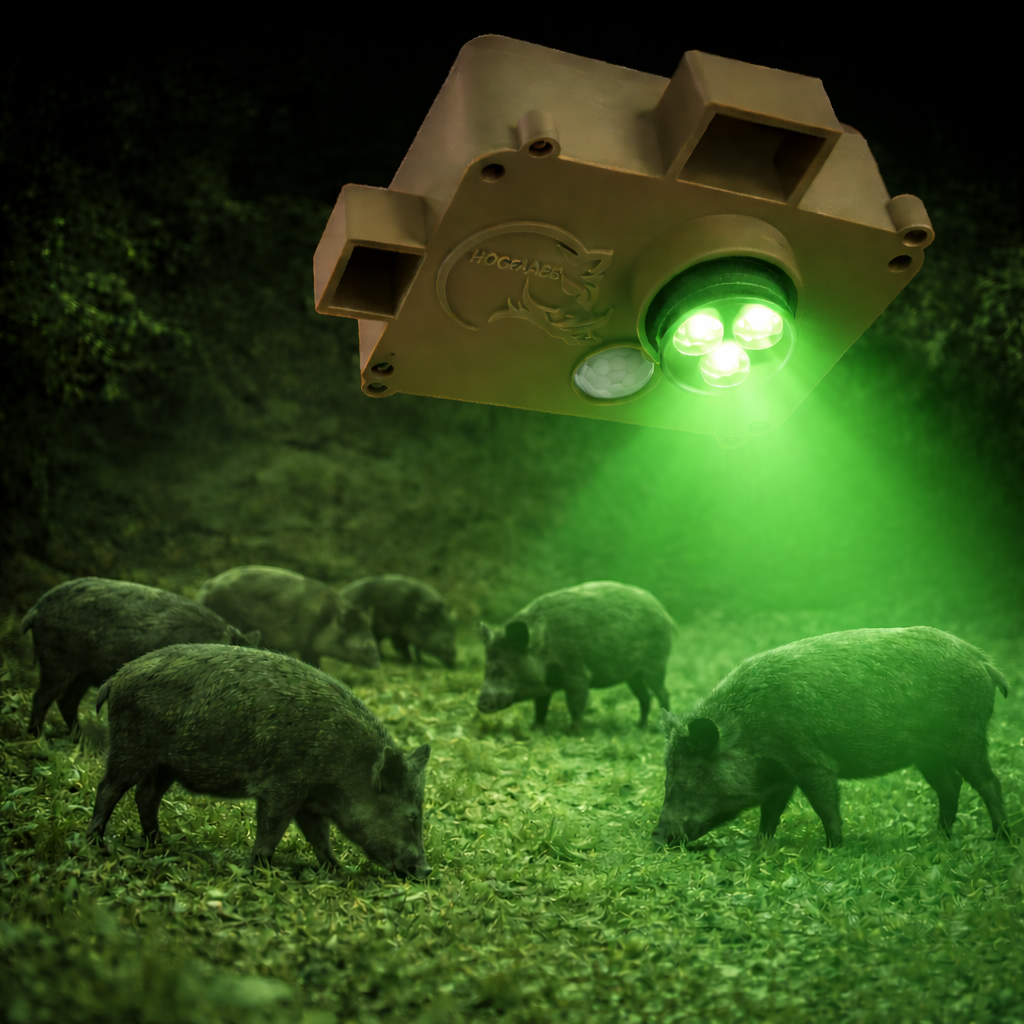
Benefits of Gradual Illumination for Hog Hunting
Table of Contents
- Why Sudden Feeder Lights Can Spook Hogs
- Benefits of Gradual Illumination
- Red, Green, and Infrared Feeder Lights
- How HOGFADER No-Spook Technology Works
- Feeder Light Setup and Mounting
- Frequently Asked Questions
Why Sudden Feeder Lights Can Spook Hogs
Feral hogs are alert to changes in their surroundings. Unexpected noise, human scent, movement, and abrupt lighting changes can interrupt feeding activity. A motion light that switches immediately to full brightness creates a sudden change in an otherwise dark feeder area.
Not every hog reacts the same way, and lighting is only one factor affecting feeder activity. Still, reducing abrupt changes can help create a more predictable nighttime environment.
Benefits of Gradual Illumination for Hog Hunting
Gradual illumination increases brightness slowly instead of switching instantly to full output. This gives animals time to adjust to changing light levels while the feeder area becomes visible to the hunter.
For nighttime hog hunting, the practical benefits may include less startling illumination, more consistent visibility at the feeder, and a better opportunity to observe animals before taking a shot. No lighting system can guarantee that hogs will remain at a feeder; wind, hunting pressure, noise, and animal behavior also matter.
HOGFADER’s Illuminator feeder light uses a programmed No-Spook lighting sequence rather than an abrupt on/off cycle.
Red, Green, and Infrared Feeder Lights
The best lighting choice depends on your hunting conditions and viewing equipment. Neither red nor green light is universally invisible to hogs.
- Green: Often appears brighter to the human eye and can help hunters distinguish animals and terrain around a feeder.
- Red: Often preferred by hunters seeking a less glaring view and better preservation of dark adaptation.
- 850nm infrared: Intended for compatible IR-sensitive night vision scopes and cameras. Some 850nm emitters produce a faint visible red glow. Thermal imaging detects heat and does not need an IR illuminator.
HOGFADER offers visible-light options and infrared configurations for appropriate equipment. Choose a wavelength that suits your optics, and pay attention to how the light increases in brightness.
How HOGFADER No-Spook Technology Works
The Illuminator’s motion-activated sequence is designed to make the transition from darkness to useful feeder illumination gradual:
- 70-second fade-up: Light starts very dim and slowly brightens.
- 120-second hold: Illumination stays at its programmed level for two minutes.
- Motion extension: The programmed sequence can add a 60-second extension when motion is detected during the hold period.
- 45-second fade-down: The light gradually dims rather than switching off abruptly.
The system also uses day/night sensing to avoid unnecessary activation in daylight. The No-Spook sequence is designed to work without requiring a lengthy light-training period, although actual animal responses vary.
Feeder Light Setup and Mounting
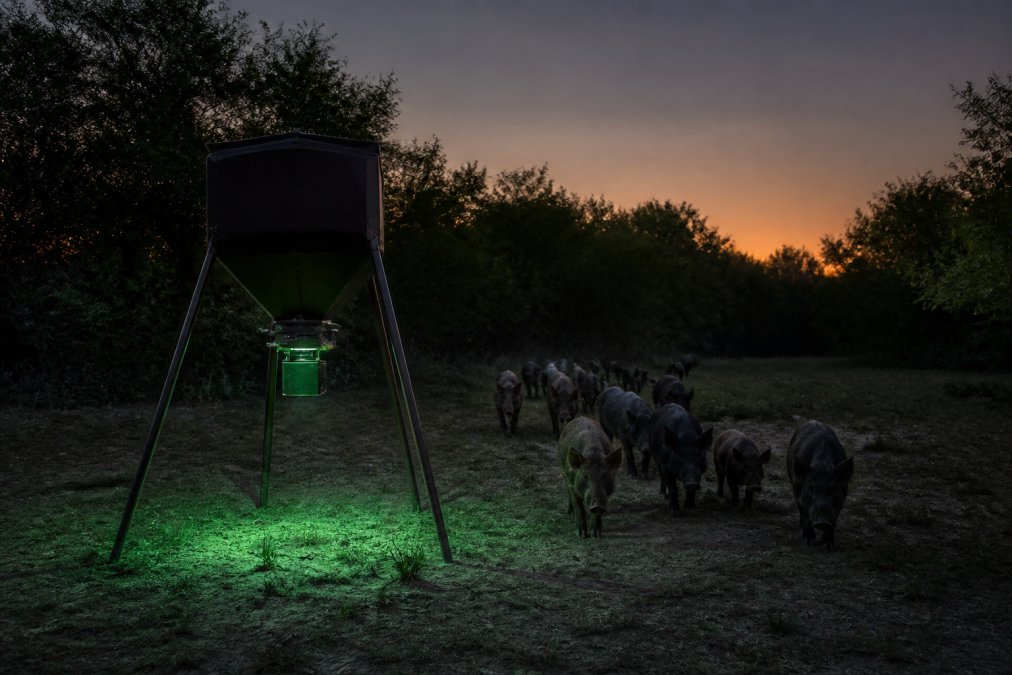
Aim the light toward the feeding area to provide useful coverage without unnecessary glare. Choose a secure mounting location and check the angle after severe weather or equipment adjustments.
For remote feeder sites, a suitable battery and solar charging setup can reduce maintenance. Position solar panels where they receive adequate sunlight, and check connections and battery condition periodically.
HOGFADER’s mounting options allow installation at a feeder or another suitable nearby support. The goal is consistent, well-placed illumination—not simply maximum brightness everywhere.
Frequently Asked Questions
Why can sudden feeder lights spook hogs?
An abrupt change from darkness to bright light can startle animals already alert to their surroundings. Their reactions vary with experience, hunting pressure, and other conditions.
Is red or green better for hog hunting?
Both can be effective. Green often looks brighter to the human eye; red may be more comfortable for dark-adapted vision. Neither is guaranteed to go unnoticed by hogs.
How long does the HOGFADER Illuminator take to brighten?
Its programmed fade-up takes approximately 70 seconds, followed by a 120-second hold and a 45-second fade-down. Motion can add a 60-second extension during the hold.
Does gradual illumination guarantee hogs will stay?
No. Gradual lighting is designed to reduce one potential source of disturbance, but scent, sound, hunting pressure, and other factors still influence behavior.
Can I use an 850nm feeder light with thermal optics?
Thermal optics do not need infrared illumination. An 850nm feeder light is intended for compatible IR-sensitive night vision equipment.