
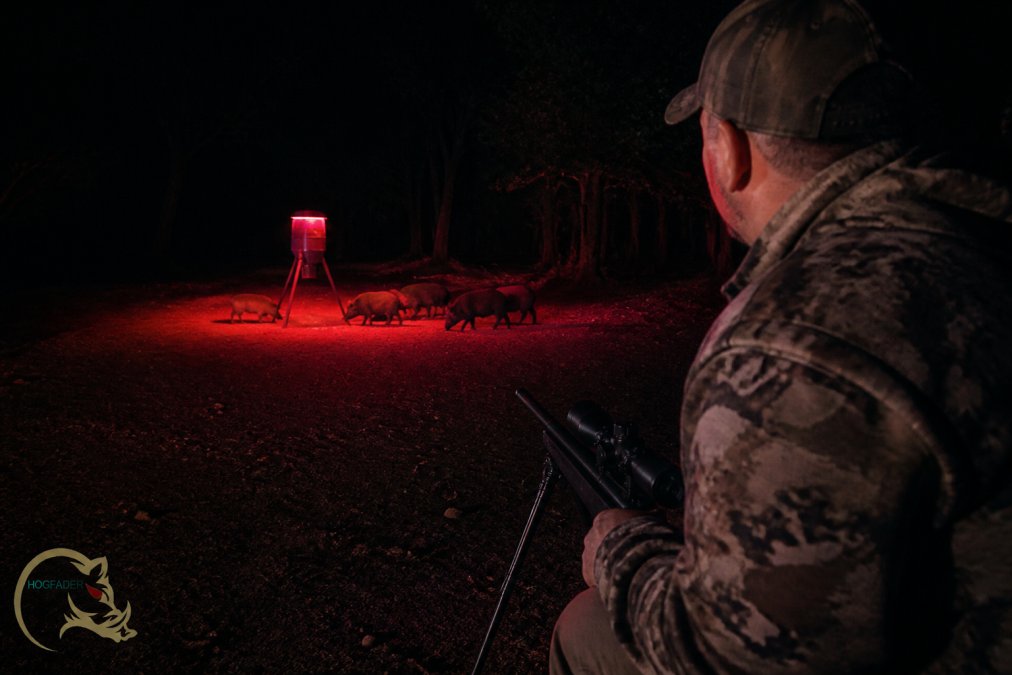
Hog Hunting in Texas: Why Summer Nights Are Ideal
The Feral Hog Problem in Texas
Feral hogs have become one of the most destructive invasive animals in Texas. Their expanding populations create serious challenges for ranchers, farmers, landowners, and wildlife managers throughout the state.
Texas has the largest feral hog population in the United States, with millions of animals distributed across much of the state. Their adaptability, high reproductive rates, and ability to thrive in different environments make controlling their populations particularly challenging.
Feral hogs can cause extensive damage by:
- Rooting through agricultural fields, pastures, and food plots.
- Damaging fences, irrigation systems, and other property.
- Contaminating water sources and potentially spreading disease.
- Competing with native wildlife for food and habitat.
- Preying on certain wildlife species and their nests.
These activities result in substantial agricultural and environmental losses every year. Hunting is one tool landowners use to help manage feral hog populations, although sustained population control often requires additional management methods.
Why Summer Nights Are Popular for Hog Hunting in Texas
Texas summers bring intense daytime heat, which can influence when feral hogs move and feed.
Although feral hogs may be active during both daylight and nighttime hours, they frequently shift more of their activity into cooler evening and nighttime periods during hot weather.
For hunters, this can create opportunities to observe hog movement around established feeding locations after sunset.
Several factors make summer night hunting appealing:
- Cooler temperatures: Evening and nighttime conditions are generally more comfortable than hunting during the hottest part of the day.
- Increased nighttime activity: Hogs may become more active after sunset when daytime temperatures are high.
- Established feeding patterns: Monitoring feeding locations can help hunters identify when hogs regularly visit an area.
- Reduced daytime disturbance: Some locations experience less human activity during nighttime hours.
However, hog behavior varies with hunting pressure, food availability, weather, and local environmental conditions. No particular time of day guarantees hog activity.
Understanding Feral Hog Behavior Around Feeders
Feral hogs are intelligent, adaptable animals that can become cautious around unfamiliar sounds, sudden movements, and abrupt environmental changes.
Hunters often observe hogs approaching feeding areas carefully, particularly in locations experiencing frequent hunting pressure.
Sudden changes in lighting can sometimes interrupt feeding activity. For this reason, many hunters prefer feeder lights that illuminate gradually rather than switching instantly to full brightness.
Proper feeder placement, consistent lighting behavior, and careful observation of local hog activity can all contribute to a more effective nighttime hunting setup.
Choosing Feeder Lights for Night Hog Hunting
Feeder lights allow hunters to observe feeding areas after dark without relying entirely on handheld flashlights or other temporary lighting sources.
Three commonly used lighting options are green, red, and infrared.
Green Hog Hunting Lights
Green feeder lights are popular because they provide strong visual contrast and useful illumination around feeding areas.
Many hunters prefer green lighting when visibility and identifying movement around the feeder are priorities.
Green illumination can be especially useful when monitoring larger feeding areas or when greater visible brightness is desired.
Red Hog Hunting Lights
Red feeder lights provide another effective option for nighttime hog hunting.
Some hunters prefer red illumination because it can feel less visually intrusive and may help preserve the hunter’s natural night adaptation compared with brighter white lighting.
Individual hog responses vary, and neither red nor green lighting guarantees that animals will remain undisturbed.
850nm Infrared Hog Hunting Lights
Infrared illumination is designed for use with compatible night vision cameras and optics.
HOGFADER’s 850nm infrared lighting can provide illumination for compatible night vision equipment without producing the same visible beam associated with red or green feeder lights.
Although 850nm infrared illumination is largely outside normal human vision, some infrared emitters produce a faint visible red glow.
Infrared illumination should not be confused with thermal imaging. Thermal devices detect heat signatures and generally do not require infrared illumination.
Why Gradual Illumination Matters Around Hog Feeders
The way a feeder light turns on can be just as important as its color.
Traditional motion-activated lights may switch immediately to full brightness when movement is detected. That sudden change can sometimes startle animals approaching a feeding area.
The HOGFADER Illuminator uses specially programmed gradual illumination designed to avoid abrupt lighting changes.
When motion activates the Illuminator, its LEDs gradually increase in brightness over approximately 70 seconds.
After reaching full programmed brightness, the light remains illuminated for approximately 120 seconds before beginning its gradual fade-down sequence.
This controlled lighting behavior provides hunters with useful visibility while reducing the sudden changes associated with conventional instant-on feeder lights.
The Illuminator is available in red and green configurations, allowing hunters to select the visible lighting color that best suits their hunting environment.
Positioning Your Feeder Light for Night Hunting
Proper placement can significantly influence how effectively a feeder light illuminates the feeding area.
Consider the following recommendations:
- Mount the light high enough to provide useful coverage of the feeding area.
- Angle the illumination toward the bait pile rather than directly toward the hunter.
- Avoid unnecessary glare and overly concentrated bright spots.
- Consider nearby trees, terrain, and other obstacles that may interfere with illumination.
- Position the light where it can be safely accessed for installation and maintenance.
HOGFADER feeder lights offer flexible mounting options for barrel feeders, box feeders, T-posts, trees, and other suitable structures.
How to Mount a HOGFADER Feeder Light | Installation Guide
For additional installation guidance, see our article on mounting HOGFADER feeder lights.
Texas Hog Hunting Regulations and Safety
Texas provides opportunities for feral hog hunting, including nighttime hunting under applicable conditions.
However, hunters should understand current regulations before hunting.
Requirements can vary depending on whether hunting takes place on private or public land, the hunter’s circumstances, and the methods being used.
Always obtain appropriate landowner permission and verify current requirements with the Texas Parks and Wildlife Department.
Safe firearm handling, positive target identification, and awareness of surrounding property are particularly important during nighttime hunting.
Explore HOGFADER Feeder Lights
Successful nighttime hog hunting depends on understanding animal behavior, selecting suitable equipment, and establishing a consistent hunting setup.
HOGFADER feeder lights are designed to provide dependable illumination around feeding areas while minimizing abrupt changes in lighting.
The Illuminator combines motion activation, gradual illumination, and flexible mounting options to help hunters monitor feeder activity after dark.
Explore the HOGFADER Illuminator Feeder Light
Final Thoughts
Feral hogs remain a significant challenge for Texas landowners, farmers, and wildlife managers.
During the hot summer months, nighttime hunting can provide opportunities to observe hogs when they are more active in cooler conditions.
Understanding hog behavior, using suitable feeder lighting, and carefully positioning equipment can help create a more consistent and productive hunting experience.
Whether you prefer red or green illumination, HOGFADER offers feeder lighting designed specifically for nighttime hog hunting applications.
Leave a comment